Modding Stellaris at the Speed of Imagination
When you spend too much time in a strategy game you inevidably arrive at the point where you are not happy with a game mechanic or have an awesome idea of how to do something differently.
Recently, I have been turning those ideas into mods for Stellaris, a space strategy game where you build and guide an interstellar civilization. AI helped me explore the game files and build what I imagined. It has been an absolute blast.
From "how do i mod this?"" to game files
The exciting part was prompting AI to just do what I imagined, without digging into the game files initialy myself. Feature by feature the mod came together and during the process the inital idea changed. It was interesting taking time between iterations to check out the generated code. I learned quiete a bit of how differnet pieces of the game are interconnected. Finding those right files and figuring out how different systems connect would have been a very difficult and exhaustive task otherwise. I would have likely given up before completing the mod.
Nowadays I can describe what I want, explore possible approaches without a lot of time investment, and work toward something playable immeadiatly. It made it much easier to stay engaged with the design: what would be fun, what should it cost, and how would it change the way I play?
What I loved was the short distance between an idea and something concrete to try. Each version gave me a better sense of what I actually wanted to build.
The most fun part, of course, was finally playing with the created mods, once they were done. It really felt like I can totally create my own game.
Virtual Districts: more city, same planet
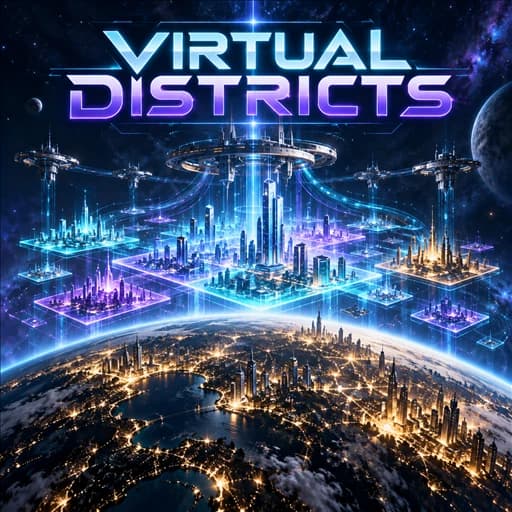
Virtual Districts is one of the mods that emerged from this collaboration with my Codex AI Assistant. For a virtual empire, expanding a city does not have to mean making the physical planet bigger. The fantasy is digital growth: more room for a civilization that lives in servers.
The mod lets those civilizations add more room to their existing worlds. Expansion gets progressively more expensive, so there is always a choice between investing in another upgrade and spending those resources elsewhere.
Other mods generated with AI
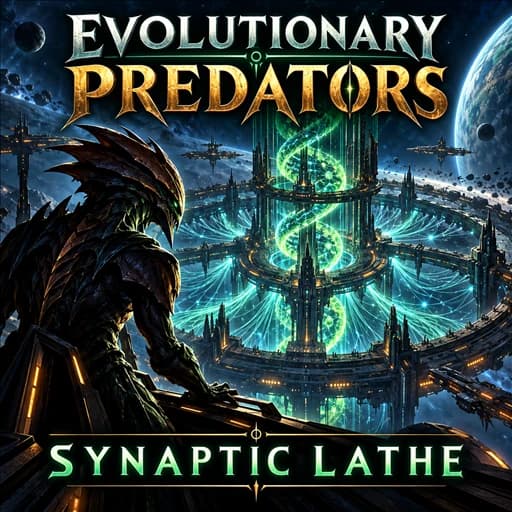
Evolutionary Predators - Synaptic Lathe links two parts of the game built around a dark science-fiction premise: a civilization that grows stronger by consuming other species, and a machine that uses captured populations to produce research. The mod makes those systems work together, giving that style of empire a more coherent identity.
Virtuality - No Colony Limit lets a digital civilization settle more worlds without the usual growing penalties to its workforce. It opens up a different way to play an empire that would otherwise have strong reasons to stay small.
Together with Virtual Districts, it explores growth in two directions: spreading across the galaxy and building more on the worlds you already have.
No Sprawl Planetary Ascension makes investing in existing worlds more rewarding by reducing the administrative burden they place on your empire. It gives players another reason to develop the planets they already have, adding more appeal to building a smaller, highly developed civilization.